
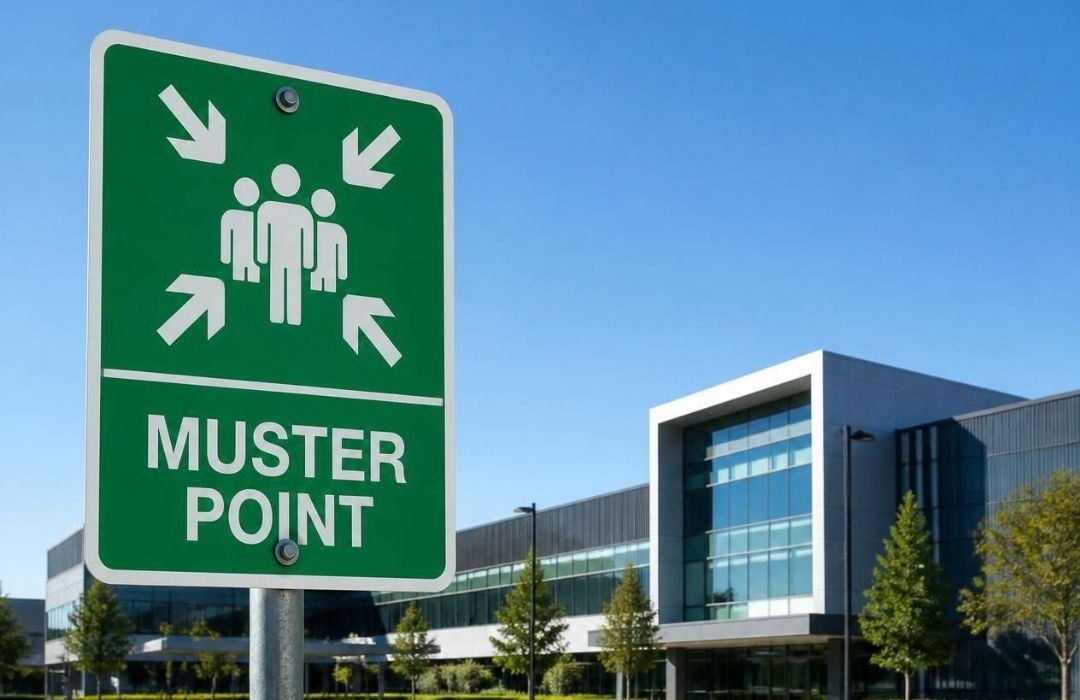
7 Best Emergency Mustering Software
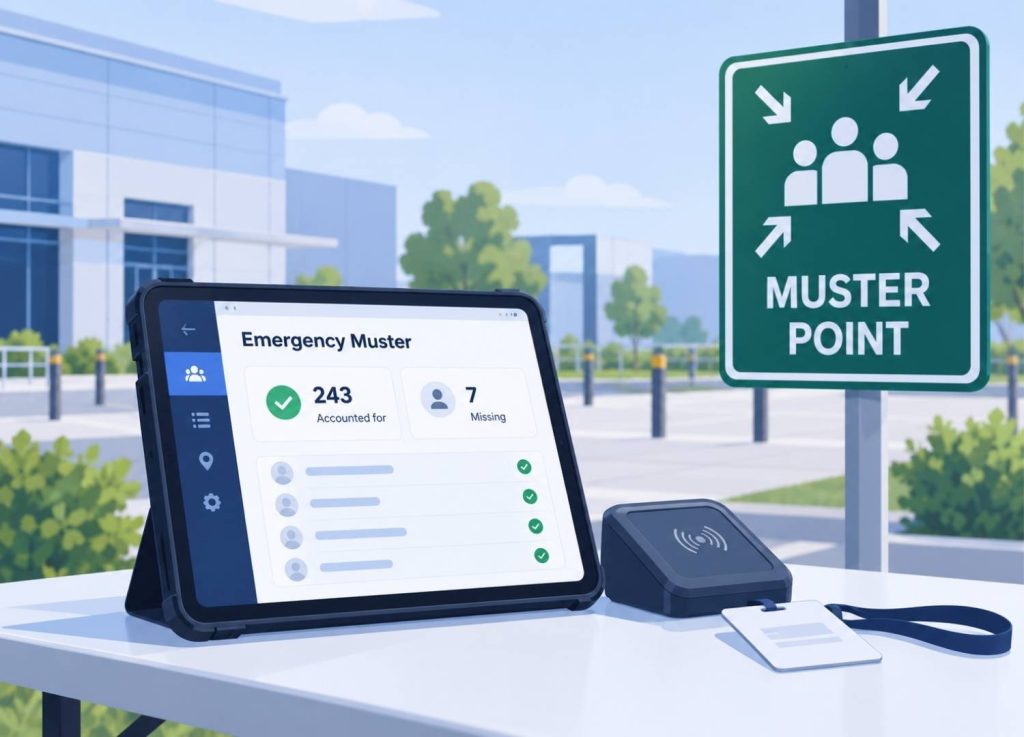
Table of Contents
Disclosure: This post is published by Cloud-in-Hand® Software Solutions and includes our own product, Stratus-io, in the comparison. We’ve aimed to be fair across every entry, based on publicly available vendor information.
When an emergency alarm sounds, the most important question is simple: is everyone safe?
Emergency mustering software helps answer that question in seconds instead of minutes, using live badge scans, mobile check-ins, and other ways to account for people at your muster points.
This guide compares seven of the best emergency mustering software platforms, including their key features, pricing, and where each one works best.
Overview
- Our top emergency mustering software picks are Stratus-io, Telaeris XPressEntry, headcount.io, iLobby EmergencyOS, Vismo, Everbridge, and TITAN HST.
- Stratus-io is our top pick for emergency mustering because it can read the RFID/NFC badges your employees already carry and works across iPhone, iPad, Android, and Windows devices.
- Telaeris XPressEntry is strong for access-control-heavy sites but ties you to customized Android handhelds.
- headcount.io is a focused evacuation app that buys its idChamp badge readers from Cloud-in-Hand.
- iLobby EmergencyOS suits facilities that want mustering bundled with visitor management.
- Everbridge is built primarily around enterprise mass notification and critical event management, with employee safety and check-in capabilities included as part of the larger platform.
How Emergency Mustering Software Works
Emergency mustering software helps account for every person on-site during an evacuation, replacing the paper roll call that can quickly fall apart once a crowd forms.
A warden can scan a badge, a worker can check in through a mobile app, or someone can respond to a text message to mark themselves safe. Each check-in updates a live roster, giving your emergency team a clearer picture of who has been accounted for and who may still be missing.
Most systems combine RFID or badge scanning for employees, SMS or app check-ins for remote staff, and manual entry for visitors and contractors. Instead of piecing together multiple lists, your team gets one live accountability record with a timestamped audit trail.
How We Picked These 7
We looked at vendor websites, product pages, and publicly available information to compare how each emergency mustering system works.
We gave the most weight to accountability accuracy and speed. After all, during an evacuation, the main job of the software is to help you quickly figure out who has been accounted for and who may still be missing.
7 Best Emergency Mustering Software
Stratus-io is the most flexible system on this list. It reads the badges your people already carry and works across iPhone, iPad, Android, and Windows devices. It has been deployed at organizations including Axalta, Emerson, and Energy Recovery.
The system can read RFID, NFC, HID, prox, QR codes, barcodes, and mobile wallet credentials. This means you can continue using existing employee badges instead of issuing new credentials or relying on proprietary hardware.
At Nyrstar’s Canadian mining operations, for example, Stratus-io helps maintain government-mandated personnel accountability across a site spanning more than 25 kilometers.
Key Features
- Read existing RFID/NFC, HID, and prox credentials
- Works across iPhone, iPad, Android, and Windows devices
- Optional access control integrations
- Real-time reporting and emergency headcounts
- Account for people through badge scans, the mobile app, SMS, geofencing, or manual entry
- Continue mustering offline and sync data once a connection is restored
Best For
- Organizations with 200+ employees, multi-site industrial operations, and teams that want to use their existing badges and mobile devices for emergency mustering.
Pricing
Custom pricing based on deployment size and hardware needs. A 30-day free trial and personalized demo are available.
Limitations
Stratus-io is not designed to be an enterprise-scale mass notification platform like Everbridge. If mass notification is your primary need, you may want to pair it with a dedicated emergency alerting system.
Telaeris XPressEntry is a handheld access-control extension that connects to 40+ platforms, including Genetec, Lenel, Honeywell, and Gallagher, to estimate occupancy from door events. The trade-off is hardware. It runs on customized Android handhelds, unlike Stratus-io, which can use devices your teams already carry.
Best For
- Facilities with established access control systems that want to extend them to handheld devices
Pricing
Custom Pricing. Contact Telaeris XPressEntry for a custom quote.
Limitations
Proprietary hardware can add to the cost, and occupancy estimates may miss tailgaters, visitors, and others who didn’t badge through a controlled door.
A focused evacuation app promising roll call under five minutes via SMS/email self-report, badge scans, and manual entry, with offline mode. Notably, its wireless badge readers are idChamp readers sourced from Cloud-in-Hand® Solutions Platform.
Best For
- A single-site team wanting a simple, dedicated roll-call app
Pricing
Custom Pricing. Contact headcount.io for a custom quote.
Limitations
It does not include time and attendance or visitor management, and relies on Cloud-in-Hand® hardware for its wireless badge readers rather than manufacturing its own
iLobby EmergencyOS combines emergency mustering with visitor management. Its VisitorOS integration pulls visitors and contractors into digital mustering lists, while EmergencyOS provides digital roll calls, status polling, zone-based building sweeps, and audit trails
Best For
- Manufacturing, healthcare, and logistics sites with heavy visitor traffic that already use, or want to use, iLobby’s ecosystem
Pricing
Custom Pricing. Contact iLobby EmergencyOS for a custom quote.
Limitations
EmergencyOS works best within the broader FacilityOS platform and is more focused on fixed facilities than sprawling or remote sites.
Vismo is a people-location and travel-safety platform where mustering is handled through “Checkpoints,” a location-based way for employees to confirm their presence. It relies more on GPS and geofencing than badge scanning and also includes mass notification and panic-button functionality.
Best For
- Organizations with traveling staff, lone workers, or teams working in higher-risk regions
Pricing
Custom Pricing. Contact Vismo for a custom quote.
Limitations
Vismo is not built for high-density badge mustering at a fixed muster point.
Everbridge is an enterprise platform built primarily for mass notification and critical event management, with 6,500+ customers including Goldman Sachs and Siemens. It offers multi-channel alerting, AI-driven risk intelligence, safety devices, and employee check-ins. Emergency accountability is one part of a much broader critical event management platform.
Best For
- Large enterprises prioritizing mass notification across multiple sites and communication channels
Pricing
Custom Pricing. Contact Everbridge for a custom quote.
Limitations
Badge-based headcounts at muster points are a smaller part of the overall platform. Organizations that need dedicated badge-based mustering may pair a mass notification platform like Everbridge with a tool like Stratus-io for the actual headcount.
TITAN HST is a mass-communication platform built for resilient communication during emergencies, with mesh networking for outages and multi-channel broadcasts. Its “Safety Check In” feature lets people report their status during an emergency rather than relying on badge scanning.
Best For
- Venues and campuses managing large crowds that prioritize resilient, two-way communication
Pricing
Custom Pricing. Contact TITAN HST for a custom quote.
Limitations
TITAN HST does not read existing RFID badges at scale the way a dedicated emergency mustering tool does.
What Does OSHA Say About Emergency Mustering?
OSHA does not require employers to use emergency mustering software. However, for workplaces required to have an Emergency Action Plan (EAP), OSHA requires the plan to include procedures for accounting for all employees after an evacuation.
That could mean conducting a roll call at an assembly area or using another method to determine who made it out safely. OSHA also recommends identifying anyone who is unaccounted for and providing their name and last known location to the person in charge or emergency responders.
Emergency mustering software can make that process faster by replacing paper lists with a live roster that updates as employees are accounted for.

Cloud-in-Hand® Solutions Team
This blog reflects the expertise of the Cloud-in-Hand® Solutions Team, with over 100 years of combined experience in hardware, software, and firmware development. Since founding Solutions Consulting in 1992 — now known as Serialio LTD — the Solutions Team has designed and developed many innovative solutions. Cloud-in-Hand® Stratus-io Time and Attendance helps organizations like Apple, Google, Toshiba, LinkedIn, Salesforce, and many more.
Cloud-In-Hand® Solution Team
This blog reflects the expertise of the Cloud-in-Hand® Solutions Team, with over 100 years of combined experience in hardware, software, and firmware development. Since founding Solutions Consulting in 1992 — now known as Serialio LTD — the Solutions Team has designed and developed many innovative solutions. Cloud-in-Hand® Stratus-io Time and Attendance helps organizations like Apple, Google, Toshiba, LinkedIn, Salesforce, and many more.
Frequently Asked Questions
What is emergency mustering software?
Emergency mustering software helps account for employees, contractors, and visitors during an evacuation. Depending on the system, people can be accounted for using badge scans, mobile apps, SMS, geofencing, or manual check-ins, giving emergency teams a live view of who is safe and who is still unaccounted for.
Does OSHA require emergency mustering software?
No. OSHA does not require employers to use emergency mustering software. However, OSHA 1910.38 requires covered Emergency Action Plans to include procedures for accounting for all employees after an evacuation. Software is one way organizations can make that process faster and easier to manage.
Standalone vs. access-control-integrated?
Standalone mustering software can be used at muster points without relying on an access control system. Access-control-integrated systems can use door or turnstile activity to help determine who may be inside, but those records may not include someone who entered without scanning a credential.
Can emergency mustering software read existing badges?
Yes, depending on the system. Stratus-io can read existing RFID and NFC badges as well as QR codes, barcodes, and mobile wallet credentials, which can help organizations avoid issuing new credentials specifically for emergency mustering.
Learn About Stratus-io
August 16, 2026
July 19, 2026